Market
Ten kilometres, twice the price: what the sea costs in the Biterrois
Valras-Plage at 3,500 €/m², Lespignan at 1,764 €/m² nine kilometres inland. The coast-to-hinterland gradient, measured on sales recorded from 2021 to 2025.
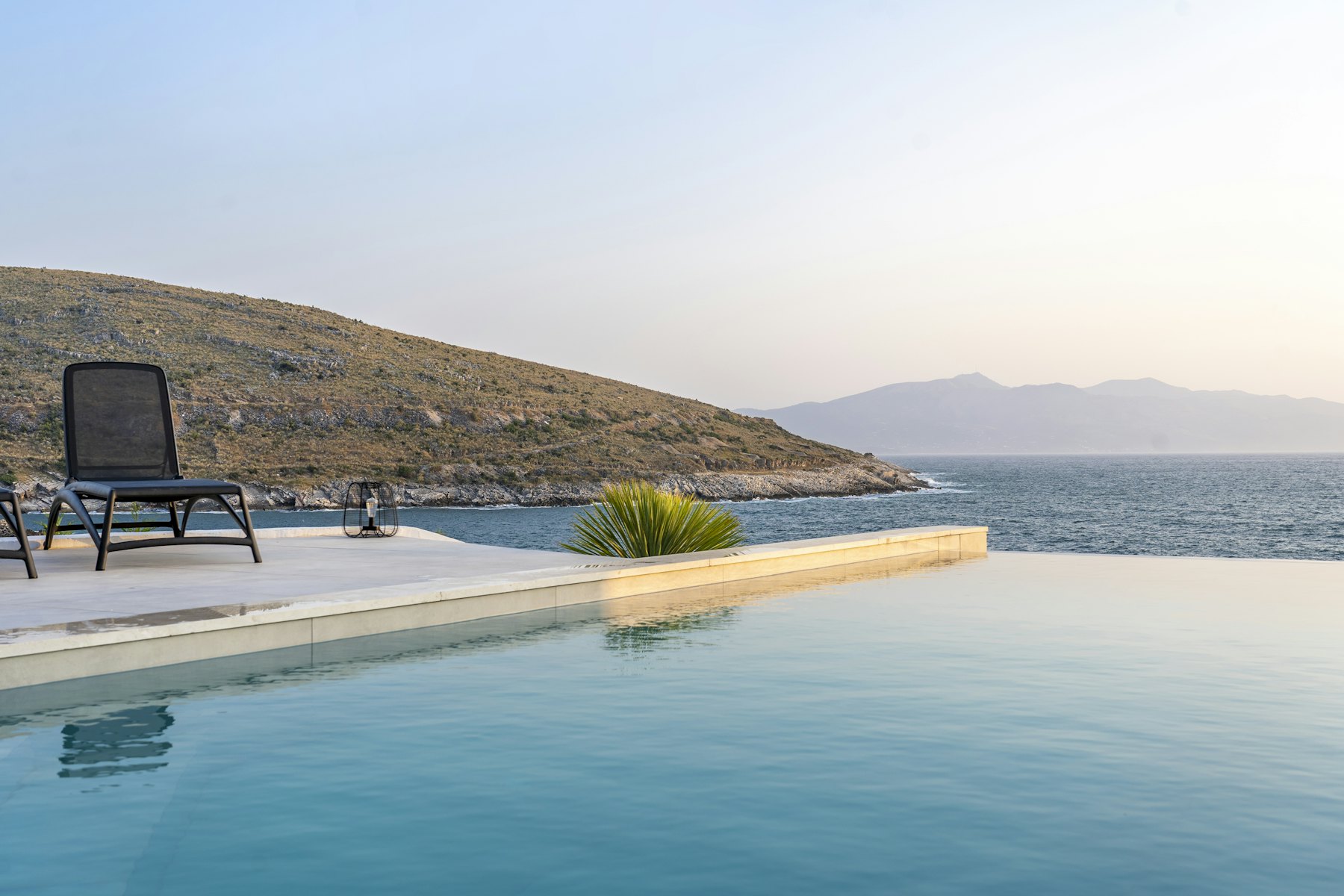
Between Valras-Plage and Lespignan there are nine kilometres of vines and a little over ten minutes of driving. Between the two median prices per square metre there is a factor of two. That, in one sentence, is the economic geography of this area.
The figures below come from the tax administration’s DVF files: sales signed, recorded and published — not asking prices. Period covered: 2021 to 2025.
The gradient, commune by commune
| Commune | Distance to the sea | Median price per m² | 100 m² at the median |
|---|---|---|---|
| Valras-Plage | 0 km | 3,500 €/m² | 350,000 € |
| Fleury-d’Aude | 0 to 6 km | 3,350 €/m² | 335,000 € |
| Vendres | 5 km | 3,229 €/m² | 322,900 € |
| Lespignan | 9 km | 1,764 €/m² | 176,400 € |
| Nissan-lez-Ensérune | 12 km | 1,793 €/m² | 179,300 € |
| Capestang | 20 km | 1,895 €/m² | 189,500 € |
| Saint-Chinian | 35 km | 1,330 €/m² | 133,000 € |
| Saint-Pons-de-Thomières | 60 km | 768 €/m² | 76,800 € |
Two things stand out. First, the fall is sharp and early: most of the gap happens between the fifth and the tenth kilometre. Second, past that break the ground is remarkably flat — Lespignan, Nissan and Capestang sit within 130 € of each other per metre although eleven kilometres separate them.
Why the break is so clean
It is not distance that is being paid for, it is a use. In the first five kilometres the property is a tourist product: it lets by the week in summer, it resells to second-home owners, and its price is worked out from a rental yield as much as from a value in use. Beyond that, the property becomes housing again, bought by people who sleep there all year and whose budget is set by local wages.
The clearest proof of that switch is a detail nobody expects: on the coast, flats sell for more per metre than houses.
| Commune | Flat | House |
|---|---|---|
| Vendres | 3,784 €/m² | 3,140 €/m² |
| Valras-Plage | 3,533 €/m² | 3,448 €/m² |
| Nissan-lez-Ensérune | 1,284 €/m² | 1,909 €/m² |
| Montady | 1,306 €/m² | 2,404 €/m² |
| Maraussan | 1,235 €/m² | 2,188 €/m² |
Inland, a flat sells 30 to 45 % below a house per metre — the usual hierarchy in rural France. On the beach it inverts: the two-room flat with a view is the product; the house is no more so.
Our reading
For a buyer weighing coast against hinterland, the useful question is not “how much do I gain by moving inland” but “from which kilometre do I stop gaining”. In this area the answer is around the tenth. Past Lespignan, each extra quarter of an hour of driving returns almost no additional buying power — until the foothills of the Haut-Languedoc, where a second drop happens for different reasons: distance from services, real winters, a falling population.
Put plainly: the first ten minutes of driving are worth about 175,000 € on a 100 m² house. The next fifty are worth barely a hundred thousand more, and they are paid for in daily distance.
For a seller in the hinterland, comparison with the coast is beside the point, and raising it in a negotiation works against you. The relevant comparable is the neighbouring commune, not the beach.
The limits of the exercise
A commune is not a point: Fleury-d’Aude contains Saint-Pierre-la-Mer on the seafront and a village inland — the median mixes both. The distances above are measured from village centre to coast, and a villa in Vendres may sit closer to the water than a flat in Valras. And DVF says nothing about the view, which is paid for dearly and appears in no column.
The detail by year, by quarter and by property type is on our price explorer: you can overlay up to five communes and watch the gradient form.